Perpetual Renovation: The Software Industry's Costly Addiction to Rebuilding What Already Functions

There is a particular kind of organizational restlessness that afflicts mature software companies. It manifests not in bold new product categories or genuine capability expansions, but in the compulsive reconstruction of things that already exist — refined interfaces, restructured settings menus, reconfigured navigation bars, and rechristened feature sets that accomplish precisely what their predecessors accomplished. The industry has a name for this activity. It calls it progress.
Windows 11 arrived with centered taskbar icons and rounded window corners. macOS has cycled through skeuomorphic leather textures, flat minimalism, and translucent panels across successive major releases. Google Chrome, a browser whose core function has remained fundamentally unchanged for over a decade, receives iterative visual overhauls with a regularity that suggests the product's actual purpose is demonstrating that it is being worked on. These are not isolated examples. They represent a structural tendency within the software industry — one that deserves closer examination than the breathless coverage of each new release typically affords.
The Economics of Visible Change
To understand why companies rebuild rather than deepen, it helps to consider what each activity produces from a business perspective. Deepening a product — adding genuinely new capability, improving reliability in ways users rarely notice, resolving edge cases that affect a small percentage of the install base — is largely invisible work. It does not generate press cycles. It does not justify marketing spend. It rarely produces the kind of before-and-after screenshots that populate technology news sites.
Redesigning a product, by contrast, is inherently communicable. A new visual language gives journalists something to photograph. It signals to enterprise procurement teams that a platform remains actively developed. It provides product managers with concrete deliverables to present in quarterly reviews. In an industry where perceived momentum often matters as much as actual capability, the redesign performs a function that genuine improvement frequently cannot: it makes activity legible.
This dynamic is compounded by the subscription economy's particular demands. When users pay recurring fees — whether directly through software subscriptions or indirectly through advertising models — companies face continuous pressure to justify ongoing payment. Visible change becomes a form of receipt. The redesigned interface is evidence that the product has not stagnated, that the subscription retains its value, that the company remains worthy of continued investment.
The Obsolescence Psychology at Work
Beyond business incentives, there is a psychological dimension to the remake cycle that operates on both the companies producing software and the users consuming it. The technology industry has cultivated, with considerable success, a cultural assumption that newer is categorically superior. This assumption does not require demonstration — it functions as a prior belief that new releases confirm rather than establish.
For software companies, this psychology creates an internal pressure that can be genuinely difficult to resist. Engineering teams exist to build things. When a product reaches functional maturity — when it does what it is supposed to do reliably and efficiently — the engineering organization faces an uncomfortable question about its own purpose. Rebuilding provides an answer. It reconstitutes the frontier, manufacturing the experience of meaningful work even when the underlying product required no fundamental change.
For users, the same psychology produces a kind of manufactured dissatisfaction. An interface that functioned adequately for years begins to feel dated the moment a successor is announced. This is not an accident. The framing of new releases as improvements implies, by necessity, that what preceded them was deficient. The user who felt no friction with the previous version is gradually persuaded that they were tolerating something substandard without realizing it.
The Hidden Costs That Never Appear in Release Notes
The remake treadmill carries costs that are systematically underreported, in part because they are distributed across millions of users rather than concentrated within the companies doing the rebuilding.
The most immediate cost is relearning. When Microsoft relocated familiar settings within Windows 11, or when Apple restructured System Preferences into System Settings across macOS versions, the change imposed a cognitive tax on every user who had developed muscle memory around the previous arrangement. Individually, this cost is modest — perhaps an hour of confusion spread across several days. Aggregated across tens of millions of users, it represents an enormous transfer of time and attention from users to the companies that decided change was warranted.
There is also the matter of compatibility disruption. Interface redesigns rarely travel alone. They typically accompany API changes, deprecated frameworks, and modified system behaviors that ripple outward through the software ecosystem. Developers who built applications to integrate with platform conventions must update their work to accommodate changes that delivered no functional benefit to anyone. This is engineering labor that produces no new capability — it merely restores the compatibility that existed before the redesign.
For enterprise environments, these costs scale considerably. Organizations that have invested in standardized configurations, training materials, and support documentation find that platform redesigns depreciate that investment on a schedule they did not choose and cannot influence. The IT department that carefully documented Windows 10 workflows faces the prospect of revising everything when Windows 11 rearranges the administrative landscape, not because Windows 11 is more capable in any operationally meaningful sense, but because someone decided the interface needed a new visual direction.
Distinguishing Renovation From Advancement
None of this is to suggest that software interfaces should never change. Genuine usability research occasionally reveals structural problems that warrant significant redesign. Accessibility improvements frequently require interface modifications that carry real value. Platform transitions — such as the shift from mouse-and-keyboard to touch-first interaction — legitimately demand rethinking how software presents itself.
The distinction worth drawing is between redesign that responds to demonstrable user need and redesign that responds primarily to organizational incentives. The former is difficult to argue against. The latter deserves the skepticism that it rarely receives from the technology press, which tends to evaluate new releases on their own terms rather than against the question of whether the change was necessary in the first place.
A useful diagnostic: when a major software update is announced, consider what problems it solves for users who were not already experiencing problems. If the answer is primarily aesthetic — if the update makes the product look different without making it demonstrably more capable, more reliable, or more accessible — the redesign is more accurately understood as a business activity than a product improvement.
The Platform That Held Still
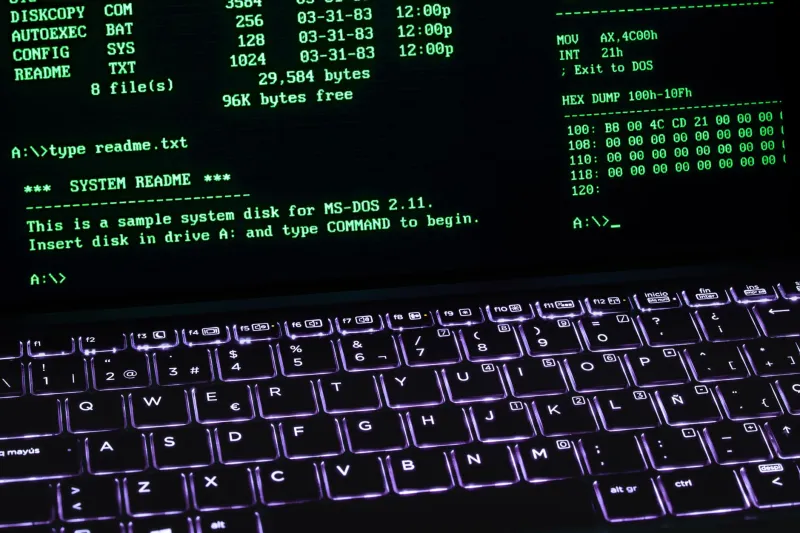
It is instructive to consider the cases where software has resisted the remake impulse. Certain developer tools, database systems, and infrastructure software have maintained recognizable interfaces and consistent behaviors across decades, accumulating capability incrementally without abandoning what preceded each addition. These products are not celebrated in technology media the way new consumer platforms are. They do not generate the same conference keynote excitement. But they command extraordinary loyalty from the professionals who depend on them, precisely because that dependability has value that no amount of visual refreshment can replicate.
The software industry would benefit from a more honest accounting of what the remake treadmill actually produces. Not every redesign is progress. Some are simply the cost of maintaining the organizational fiction that perpetual motion and genuine advancement are the same thing.