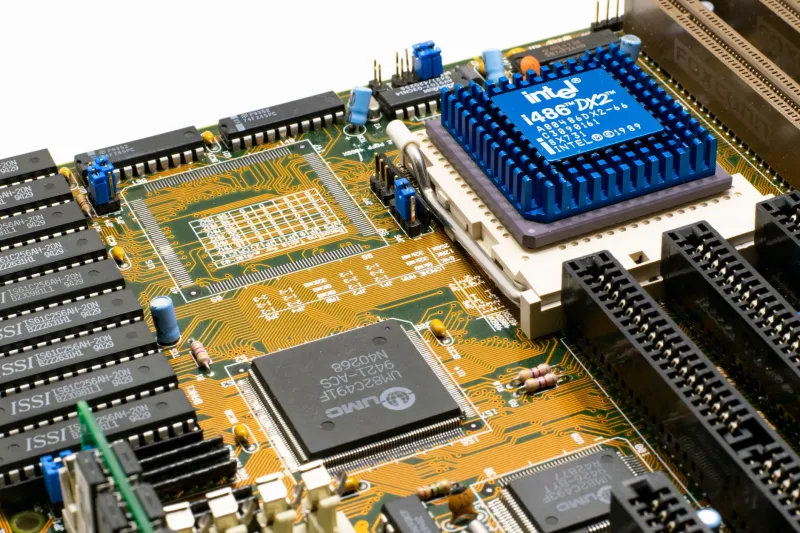
Legacy in Name Only: The Quiet Deception Behind OS Backward Compatibility
There is a particular kind of promise that technology companies make with great fanfare and honor with great reluctance. Backward compatibility — the assurance that software written years or even decades ago will continue to function on a modern operating system — ranks among the most politically useful and technically burdensome commitments in the industry. Platforms invoke it to retain enterprise customers, to soften the blow of major version transitions, and to distinguish themselves from competitors who have made cleaner but more disruptive breaks with the past. What they rarely advertise is the mounting cost of that promise, or the sophisticated mechanisms by which they quietly walk it back.
The result is something that might charitably be called compatibility theater: a staged performance in which the operating system appears to embrace legacy software while systematically degrading the conditions under which that software can realistically operate.
The Architecture of a Managed Retreat
Microsoft has long been the most visible practitioner of this particular art. Windows carries the weight of decades of application support, and the company has consistently positioned that continuity as a competitive advantage over macOS and Linux. Enterprises running line-of-business applications built on early .NET frameworks, or even older Win32 subsystems, have been told, repeatedly, that their investments are protected.
Yet the experience of running genuinely legacy software on Windows 11 reveals a different reality. Compatibility shims — translation layers that intercept legacy API calls and reroute them to modern equivalents — introduce latency that, while imperceptible for simple tasks, compounds under load. Security mitigations introduced after high-profile vulnerabilities have selectively disabled functionality that older applications depend upon, often without clear documentation of what changed or why. And the hardware requirements introduced with Windows 11, particularly the TPM 2.0 mandate, effectively orphaned machines that ran Windows 10 without incident, collapsing the compatibility promise at the infrastructure level before the software conversation even begins.
This is not negligence. It is policy, pursued with enough plausible deniability to avoid the accusation of deliberate obsolescence.
macOS and the Disappearing Bridge
Apple's approach is, in some respects, more honest precisely because it is more abrupt. The company's 2020 transition from Intel to Apple Silicon processors required Rosetta 2, a binary translation layer that allowed applications compiled for x86 processors to run on ARM-based hardware. The technology is genuinely impressive — in many cases, translated applications perform competitively with their native counterparts. But Rosetta 2 was never framed as a permanent solution. Apple explicitly deprecated support for 32-bit applications beginning with macOS Catalina in 2019, leaving behind a significant catalog of software with no migration path and no warning proportionate to the disruption.
The pattern is consistent across Apple's platform history. Each major architectural transition — from PowerPC to Intel, from 32-bit to 64-bit, from Intel to Apple Silicon — has been accompanied by a transitional compatibility layer and a quiet countdown clock. Users who missed the clock found themselves stranded. The compatibility was real, but it was always temporary, and the terms of its expiration were rarely communicated with the clarity the situation warranted.
For creative professionals and small studios in the US who had built workflows around specific legacy tools — audio plugins, niche design applications, specialized utilities — the Catalina transition was not an inconvenience. It was a forced platform migration disguised as a routine system update.
Linux and the Illusion of Stability
The Linux ecosystem presents a different kind of compatibility problem, one rooted less in corporate strategy and more in structural fragmentation. The kernel itself maintains a strong commitment to backward compatibility for user-space applications, a policy Linus Torvalds has defended vigorously over the years. But the kernel is only one layer of a complex stack.
Distributions make independent decisions about which libraries to include, which versions to ship, and when to retire older dependencies. An application that runs cleanly on one distribution may fail silently on another because a shared library has been updated, a deprecated function has been removed, or a security patch has altered expected behavior. The introduction of containerization formats like Snap and Flatpak was, in part, an acknowledgment that the traditional distribution model could not reliably deliver compatibility across the ecosystem's diversity.
But containerization introduces its own friction. Applications sandboxed in these formats frequently lose access to system integrations that users expect as standard. Font rendering inconsistencies, theme incompatibilities, and permission restrictions create a user experience that technically qualifies as "running" while functionally falling short of what that word implies. The application launches. Whether it works is a separate question.
The Security Bargain Nobody Explains
Underlying all of these compatibility mechanisms is a security trade-off that operating system vendors consistently underemphasize. Maintaining support for legacy code paths means maintaining exposure to the vulnerabilities embedded in those paths. Every compatibility shim, every translation layer, every deprecated API kept alive for enterprise customers represents an attack surface that modern threat actors are fully capable of targeting.
The 2021 PrintNightmare vulnerability, which exploited the Windows Print Spooler service, illustrated the stakes clearly. The service had roots stretching back through multiple Windows generations, and the complexity of maintaining its legacy behavior contributed directly to the conditions that made exploitation possible. Microsoft's patches were iterative and, in some cases, incomplete — a consequence of the difficulty of surgically modifying code that touches so many historical dependencies.
This is the hidden cost that compatibility theater conceals from its audience. The performance of support is not neutral. It consumes engineering resources, introduces systemic risk, and creates a maintenance burden that grows with every year the legacy surface area is preserved.
What Honest Compatibility Would Look Like
None of this is to argue that backward compatibility is without value. For the enterprises, institutions, and individual users who depend on established software ecosystems, continuity is not a luxury — it is an operational requirement. The criticism is not of compatibility itself but of the gap between how it is marketed and how it is delivered.
An honest compatibility commitment would include clear, specific timelines for deprecation communicated well in advance of enforcement. It would distinguish between full support and best-effort compatibility in terms users can act upon. It would acknowledge, plainly, when a security mitigation has altered the behavior of legacy software and explain what that means for users who have not yet migrated.
Instead, the industry has largely settled on a model of ambiguity — one in which support is implied until it quietly isn't, and users discover the limits of the promise only when something stops working. That ambiguity serves the vendor's interests. It rarely serves anyone else's.
Operating systems are the foundational infrastructure of digital life in the United States and globally. The commitments their developers make shape investment decisions, workflow design, and institutional planning across every sector of the economy. When those commitments are performed rather than honored, the consequences are not abstract. They arrive as broken workflows, emergency migration projects, and security incidents that a clearer conversation might have prevented.
The theater is convincing. That, unfortunately, is precisely the problem.