Haunted by Hardware: The Compulsion to Resurrect What the Industry Already Buried
There is a particular kind of institutional optimism that convinces engineers and executives alike that a technology declared dead simply needs the right circumstances to live again. Adobe Flash did not fade quietly — it was publicly, ceremonially retired, with browsers removing support and Adobe itself issuing the equivalent of a digital death certificate. And yet, years after that conclusion, enterprises were still running Flash-dependent internal tools, vendors were still offering compatibility shims, and certain corners of the industrial software market were still treating its resurrection as a reasonable roadmap item. Flash is not exceptional in this regard. It is representative.
The tech industry's relationship with obsolete systems is less a matter of nostalgia and more a reflection of structural incentives that make revival consistently more attractive than replacement — at least on paper, and at least in the short term.
The Accounting Logic of the Undead
Understanding why companies reach for resurrection requires understanding how technology investments are accounted for, both financially and organizationally. When a company has spent years — sometimes decades — building workflows, training staff, and constructing dependent systems around a particular technology, the sunk cost is not merely financial. It is embedded in institutional knowledge, in vendor relationships, in the muscle memory of entire departments.
Abandoning that investment entirely demands something psychologically and bureaucratically difficult: acknowledging that the foundation was wrong and committing to an undefined future. Reviving the existing technology, by contrast, can be framed as protecting prior investment. It is a narrative that survives budget meetings far more comfortably than "we need to rebuild from scratch."
This dynamic played out visibly in the extended life of Internet Explorer. Microsoft's browser had been declared functionally obsolete by nearly every meaningful metric — security researchers, web standards bodies, and developers were unanimous. Yet enterprises continued demanding IE compatibility, and Microsoft, rather than cleanly severing the cord, introduced IE compatibility modes into Edge. The resurrection was not technical ambition. It was customer retention dressed in engineering language.
32-Bit Architecture and the Weight of Installed Base
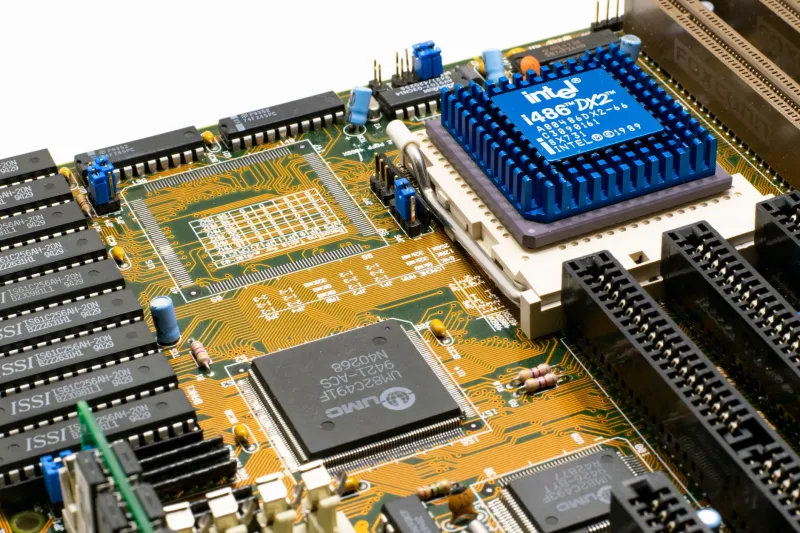
Few examples illustrate the resurrection trap more clearly than the persistence of 32-bit architecture support in modern operating systems. The technical case for maintaining 32-bit compatibility in a world of 64-bit processors is, charitably, thin. The performance ceiling is lower, the addressable memory is severely constrained, and the security surface area is broader. The argument for deprecation writes itself.
And yet Apple's full removal of 32-bit app support in macOS Catalina in 2019 was treated by significant portions of the user base as a hostile act. Microsoft has maintained 32-bit Windows builds for far longer than the underlying technical rationale would justify. The reason is not engineering conservatism — it is the installed base. Millions of applications, many of them critical to specific industries, were built on 32-bit assumptions. Killing the platform means stranding those users.
The trap is self-reinforcing. The longer compatibility is maintained, the more dependent the ecosystem becomes, and the more catastrophic clean severance appears. Companies find themselves perpetually extending the life of something they know should be retired because retirement becomes progressively more expensive the longer it is deferred.
When Resurrection Becomes a Product Strategy
Some resurrections are not accidental byproducts of organizational inertia — they are deliberate product decisions, marketed with genuine enthusiasm. The return of physical keyboards on smartphones was attempted repeatedly after touchscreens became dominant. Virtual reality headsets have been "the next platform" in approximately four different decades. The metaverse, whatever one chooses to call it, was in many respects a repackaging of virtual world concepts that had already failed commercially in the mid-2000s.
These deliberate revivals tend to share a common structure: an original technology that failed due to some combination of insufficient hardware, inadequate software ecosystems, and premature market timing. The revival argument holds that conditions have changed sufficiently to make the concept viable now. Sometimes that argument is correct. More often, it underestimates the degree to which the original failure was conceptual rather than merely circumstantial.
The challenge is that "conditions have changed" is an unfalsifiable premise until after significant capital has been deployed. This makes resurrection pitches structurally difficult to evaluate honestly inside organizations where the people making the case are often the same people whose careers are invested in the outcome.
What Innovation Actually Requires
The more substantive question is not why resurrection happens — the incentives are clear enough — but what it displaces. Every engineering hour spent maintaining Flash compatibility shims is an hour not spent on something genuinely new. Every product roadmap cycle devoted to rehabilitating a deprecated architecture is a cycle not devoted to rethinking the architecture entirely.
This opportunity cost is rarely made explicit in organizational decision-making. Resurrection is evaluated against the cost of doing nothing, not against the cost of genuine innovation. When framed as "maintain legacy support versus abandon users," the choice appears obvious. When framed as "maintain legacy support versus invest equivalent resources in next-generation infrastructure," the calculation changes substantially — but that second framing rarely appears in the presentation.
There is also a talent dimension that tends to be underweighted. Engineers who want to build new things leave organizations that ask them to maintain old ones. The companies most committed to resurrection strategies gradually become organizations staffed by people comfortable with preservation rather than creation, which makes future resurrection even more likely and future innovation even more difficult.
The Exit That Never Comes
Perhaps the most honest observation about the resurrection trap is that the companies caught in it rarely escape through strategy. They escape through crisis. Flash was not gracefully retired by Adobe — it was killed by a combination of Apple's refusal to support it on iOS and an unrelenting series of critical security vulnerabilities that made continued support untenable. The clean break happened not because someone made a courageous roadmap decision, but because the alternative became genuinely catastrophic.
Internet Explorer's final deprecation followed a similar pattern. Years of announced end-of-life timelines produced limited behavioral change in enterprise environments. It took Microsoft setting hard cutoff dates and withdrawing security patches to force the transition that market pressure alone had failed to accomplish.
The implication for the industry is uncomfortable but worth stating plainly: if the exit from obsolete technology typically requires external forcing functions rather than internal discipline, then the resurrection trap is not primarily a strategic failure. It is a governance failure. The organizations best positioned to avoid it are those that build explicit sunset planning into technology adoption from the beginning — treating the question of how a technology will eventually be retired as seriously as the question of how it will be initially deployed.
The graveyard of revived technologies is not a monument to ambition. It is a record of deferred decisions, compounding interest on organizational reluctance, and the persistent human preference for the familiar over the genuinely new. The industry will keep returning to it until the cost of doing so finally exceeds the cost of staying away.