Convenient Ignorance: How Automated Defaults Are Quietly Eroding User Competence

There is a particular kind of helplessness that arrives not through deprivation but through abundance. American consumers have grown accustomed to software that anticipates, decides, and executes — operating systems that update themselves overnight, applications that reorganize content before a user has formed a preference, and AI-powered features that produce answers without revealing the questions they silently asked on the user's behalf. The machinery hums along efficiently, and the human at the keyboard is left with fewer decisions to make and, consequently, fewer skills to exercise.
This is not a conspiracy. It is, in most cases, genuinely well-intentioned engineering. But intent and outcome are not always aligned, and the cumulative effect of systems designed to reduce friction deserves more rigorous scrutiny than the industry typically invites.
The Update That Nobody Scheduled
Automatic updates represent perhaps the most visible front in this conversation. The security argument for automatic patching is legitimate and well-documented: unpatched systems remain the most consistent vector for large-scale breaches, and the average user cannot be expected to maintain a disciplined patch schedule. That logic is sound.
What that logic does not fully account for is the collateral disruption that follows when updates arrive without negotiation. A Windows machine rebooting during an active remote session, a macOS update silently altering audio routing configurations, a productivity application quietly retiring a keyboard shortcut that a professional had spent years committing to muscle memory — these are not hypothetical grievances. They are recurring complaints documented across enterprise help desks and developer forums with remarkable consistency.
The user in each of these scenarios did not make a mistake. The system made a decision on their behalf and presented the consequences as an environmental condition rather than a choice. Over time, users trained in this environment learn something specific: their preferences are provisional. The system's agenda supersedes their own, and the appropriate response is adaptation rather than configuration.
Complexity Hidden Is Not Complexity Resolved
The emergence of AI-powered features across mainstream operating environments has introduced a more sophisticated variation of the same dynamic. Tools like Windows Copilot, Apple Intelligence, and the growing roster of embedded AI assistants in productivity software are marketed as complexity reducers. They summarize, they prioritize, they draft, they decide.
What they do not do — at least not transparently — is expose the criteria by which those summaries, priorities, drafts, and decisions were reached. A user who asks an AI assistant to organize their inbox receives a result, not an education. A developer who relies on an AI code completion tool to resolve an unfamiliar function call may ship working code without ever understanding what the function does or why the suggestion was appropriate. The output is correct; the comprehension is absent.
This is a meaningful distinction that the industry tends to flatten. Automation that genuinely reduces cognitive load by handling tasks that require no skill development is categorically different from automation that substitutes for skill development the user actually needs. Spell-check belongs to the former category. An AI tool that writes your technical documentation without requiring you to understand what you are documenting belongs to the latter.
The Default as a Policy Decision
Software defaults are not neutral. Every default setting encodes a judgment about what the typical user wants, and that judgment is rarely made by the user. It is made by a product team operating under a combination of user research data, business objectives, and engineering convenience — weighted in proportions that are seldom disclosed.
When a new operating system installation defaults to telemetry collection, that is a policy decision expressed through a checkbox that most users never examine. When a mobile platform defaults to sharing location data with first-party applications, that is a policy decision dressed as a convenience setting. When a cloud-based office suite defaults to auto-saving every keystroke to a remote server, that is a policy decision framed as a feature.
Users who accept defaults wholesale are not lazy. They are responding rationally to an environment in which the cost of investigating every default exceeds the apparent benefit of doing so. But the rational individual response produces a troubling aggregate outcome: a population of users who have effectively delegated their configuration preferences to the entities that profit from particular configurations.
What Atrophies When Machines Decide
The deeper concern is not any single automated decision but the cumulative effect on user capability over time. Skills that are not exercised deteriorate. A generation of users who have never configured a network adapter, edited a hosts file, or managed their own backup schedule is a generation that is genuinely less equipped to diagnose problems, evaluate alternatives, or advocate for their own technical preferences.
This dynamic is not unique to computing. Automotive navigation systems have measurably degraded spatial orientation skills in populations that rely on them exclusively. The phenomenon is well-established in cognitive science under the general framework of cognitive offloading, and there is no particular reason to believe that digital environments are immune to the same pattern.
The question worth asking is not whether automation is inherently harmful — it is not — but whether the specific automation choices embedded in contemporary operating systems and applications have been designed with any regard for preserving user competence as a value worth protecting. The evidence, on balance, suggests that competence preservation has not ranked highly in most product roadmaps.
Reclaiming the Configuration Layer
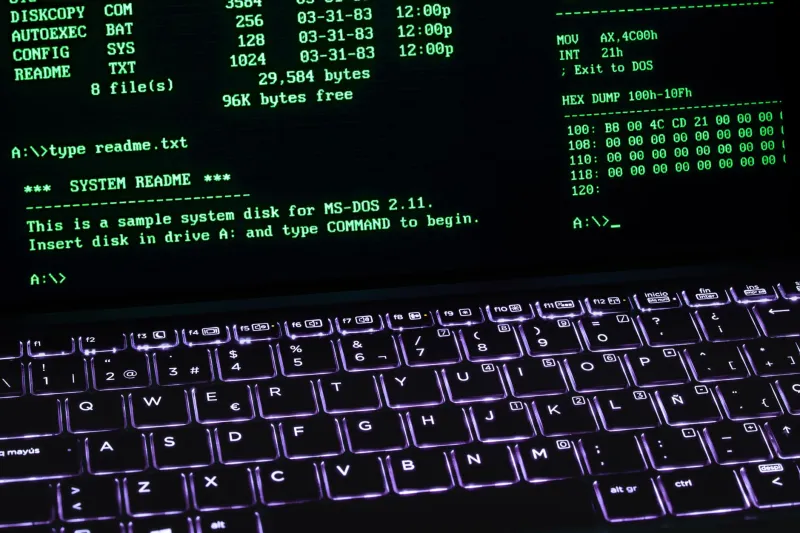
None of this demands a return to the command-line austerity of earlier computing eras. The appropriate response is not nostalgia but intentionality. Operating systems and applications can offer automation without mandating it. They can surface the logic behind their decisions rather than concealing it. They can present defaults as starting points rather than conclusions.
Some platforms are moving in this direction, however incrementally. Linux distributions have long offered configuration depth as a feature rather than an obstacle, and that philosophical orientation has contributed meaningfully to the loyalty of technically sophisticated user communities. The question is whether mainstream platforms — the ones that shape the digital experience for the majority of American users — will find commercial incentive to follow.
For now, the most practical guidance is the most straightforward: examine your defaults. Not obsessively, and not in the spirit of paranoia, but with the recognition that every setting you have never reviewed is a decision someone else made for you. Some of those decisions will align with your preferences. Others will not. The only way to know the difference is to look.
The machines are not making you dumber on purpose. But the effect may be the same regardless of the intent — and that is precisely the kind of outcome that careful analysis exists to name.