The Fork in the Road: How Community Developers Are Building a Software World Without Corporate Permission
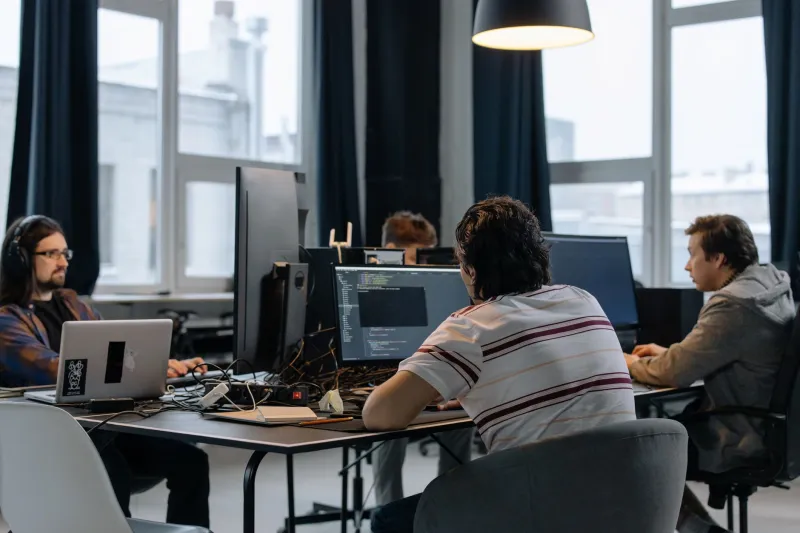
Every major open source project begins with an act of refusal. Someone, somewhere, looks at the software they have been given — or sold, or rented, or had imposed upon them — and decides they can do better, or at least differently. Sometimes that refusal is ideological. Sometimes it is purely technical. Often it is both, tangled together in a way that makes it difficult to separate the pragmatism from the principle.
What is notable about the current moment is not that this refusal exists — it has always existed, in various forms, since the earliest days of computing culture — but that it appears to be intensifying. The conditions that once made corporate software an unavoidable default are weakening. Cloud infrastructure has democratized distribution. Remote collaboration tools have made geographically dispersed contributor teams viable. And a decade of increasingly aggressive monetization by major software vendors has given a new generation of users concrete, personal reasons to seek alternatives.
The result is not a single movement with a unified manifesto. It is a sprawling, decentralized, occasionally contradictory ecosystem of projects, forks, replacements, and experiments — all of which share, at minimum, the conviction that the software landscape does not have to look the way it currently does.
The Established Guard: LibreOffice and GIMP as Case Studies in Endurance
LibreOffice and GIMP occupy an unusual position in the open source landscape: they are old enough to have accumulated institutional weight, yet perpetually dismissed by critics who argue they have never quite matched their proprietary counterparts. Both assessments contain truth, and both miss something important.
LibreOffice, maintained by The Document Foundation, handles the office productivity needs of millions of users worldwide — including significant deployments in European government agencies, educational institutions, and organizations that have made formal commitments to software independence. Its feature set is genuinely comprehensive. Its file format compatibility with Microsoft Office, while imperfect at the margins, is sufficient for the vast majority of real-world use cases. The reasons most American knowledge workers have never seriously considered it have less to do with its capabilities than with the network effects of organizational standardization.
GIMP presents a more contested picture. Professional designers frequently criticize its interface conventions and its historical resistance to adopting certain features standard in Adobe Photoshop. These criticisms are not entirely without merit. But GIMP also represents something that Photoshop, now locked behind a Creative Cloud subscription, cannot offer: a capable, non-destructive image editor that a user can download, install, and run indefinitely without ongoing financial obligation to any corporation. For a significant population of users — educators, students, independent creators, organizations in lower-income markets — that distinction is not academic. It is the difference between access and exclusion.
The New Wave: Projects Built for the Post-Corporate Moment
What makes the current landscape distinct from earlier generations of open source advocacy is the quality and ambition of projects emerging in the last several years. These are not merely functional alternatives grudgingly tolerating their own limitations. Several are actively competing on design, performance, and user experience — the dimensions on which open source software was historically most vulnerable to criticism.
Blender has arguably achieved the most dramatic version of this arc. Once a niche tool with a notoriously steep learning curve, it now powers production work at studios that previously relied exclusively on proprietary 3D software. Its 2.80 redesign, driven by community feedback and funded in part through a foundation model, addressed the interface criticisms that had long limited its mainstream adoption. It is, by most objective measures, world-class software — and it is developed entirely outside the corporate product cycle.
In the communications space, Matrix and its primary client Element are constructing a federated messaging infrastructure that operates without any single company controlling the protocol. Signal, while not strictly open source in its server infrastructure, publishes its client code and has become the de facto standard for end-to-end encrypted messaging among privacy-conscious users. Thunderbird, long considered a legacy application, recently received renewed investment and a substantive redesign that has re-energized its user community.
In developer tooling, the picture is particularly active. Neovim, a community-maintained fork of Vim, has attracted a generation of developers who want the efficiency of modal editing without the constraints of a codebase governed by a single maintainer. Helix takes the concept further, rethinking the modal editor paradigm from scratch. Zed, while not open source in the traditional sense, publishes its code and operates with a community-oriented philosophy that distinguishes it from conventional commercial software.
The People Making This Happen — and What Motivates Them
The contributor base for these projects defies easy demographic generalization. It includes professional software engineers who contribute in their discretionary time, academics who build tools aligned with their research, students learning through participation, and a substantial cohort of individuals whose primary motivation is ideological: a genuine conviction that software infrastructure should be accountable to its users rather than to its investors.
That ideological strand is worth examining without dismissal. The critique it embodies — that corporate control of essential software infrastructure creates structural vulnerabilities for users, organizations, and societies — has grown more empirically defensible as the behavior of major software vendors has become more aggressive. Adobe's acquisition strategy, Microsoft's subscription pivot, and the steady erosion of perpetual licensing options across the industry have provided the open source community with a stream of concrete evidence supporting arguments it has been making for decades.
At the same time, ideological motivation alone does not sustain projects at scale. The open source ecosystem has learned, sometimes painfully, that volunteer labor has limits. The most successful community projects have developed funding models — foundation structures, corporate sponsorships, dual licensing arrangements, donation programs — that allow them to employ core maintainers without surrendering the independence that defines them. The Document Foundation, the GNOME Foundation, the Software Freedom Conservancy, and similar organizations represent an institutional infrastructure for community software that simply did not exist twenty years ago.
The Scaling Question: Can This Ecosystem Reach Beyond Its Committed Base?
This is the question that advocates and skeptics alike keep returning to, and it does not have a satisfying answer yet. The open source ecosystem has demonstrated, repeatedly, that it can produce software of genuine excellence. It has not yet demonstrated that it can reliably deliver that software to the broad consumer market in a way that displaces corporate alternatives for mainstream users.
The barriers are real. Corporate software benefits from marketing budgets, pre-installation agreements with hardware manufacturers, deep integration with enterprise IT procurement processes, and the simple inertia of familiarity. LibreOffice does not appear in Best Buy. GIMP does not run advertisements during sporting events. These are not trivial disadvantages.
Yet the conditions for broader adoption are arguably more favorable now than they have ever been. Subscription fatigue is a documented and growing phenomenon among American consumers and businesses. The price sensitivity created by stacking multiple monthly software charges has made users more receptive to evaluating alternatives than they were in the perpetual license era. And the quality gap between community and corporate software, in many categories, has narrowed to a point where it no longer constitutes a decisive argument against switching.
A Parallel Ecosystem, Not a Replacement
The most accurate way to characterize what is being built may be neither revolution nor niche hobby. It is a parallel infrastructure — one that exists alongside the corporate software world, serves a meaningful and growing population of users, and provides a structural alternative that would not otherwise exist.
Whether that alternative eventually displaces the corporate model, coexists with it indefinitely, or gets absorbed by it through acquisition and co-optation is a question that will be answered over years and decades, not quarters. What is clear is that the developers building it are not waiting for permission — and increasingly, they are not building for an audience of enthusiasts alone.