The Invisible Empire: How Linux Conquered the Digital World Without Winning a Single Ad Campaign
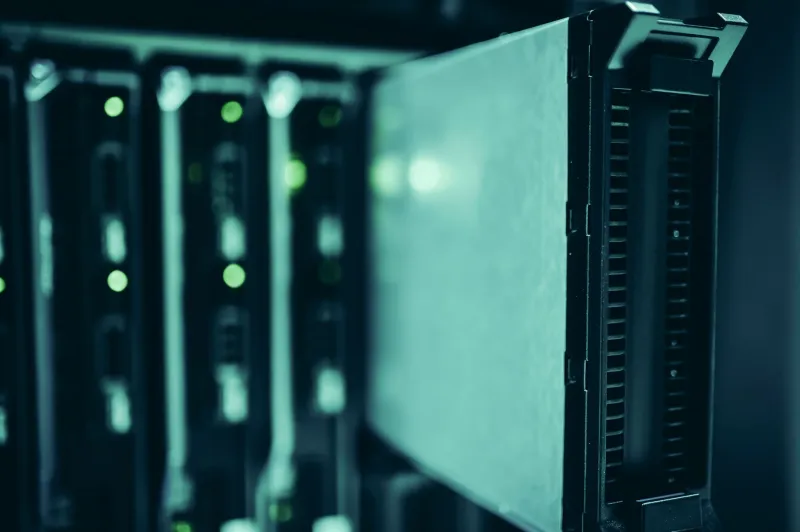
Linux didn't win the operating system wars through marketing, retail shelf space, or celebrity endorsements. It won through relentless utility, and it did so so quietly that the average American using it every single day has no idea it's there. That invisibility is both Linux's greatest triumph and its most fascinating paradox.
Let's be direct about something that the technology industry rarely states plainly: the contest over which operating system would define modern computing is, for all practical purposes, over. Linux won. The debate now is not about victory but about whether anyone outside of a server room or a developer's workstation will ever acknowledge it.
Everywhere You Look, If You Know Where to Look
Consider the infrastructure that underpins a single ordinary Tuesday in an American's digital life. You wake up and check your Android phone—Linux kernel. You stream a podcast through Spotify's servers—Linux. You order coffee through an app, process a payment, check your work email on a corporate cloud platform, stream a show on Netflix during your lunch break, use a voice assistant, search the web, scroll through a social media feed. At virtually every point where your data touches a server, a container, a cloud instance, or an embedded system, Linux is the operating environment making it possible.
According to the Linux Foundation's most recent annual report, the Linux kernel is now the most widely deployed operating system in human history when measured across devices and infrastructure combined. It powers more than 90 percent of the world's cloud computing workloads. It runs on all 500 of the TOP500 supercomputers. It is the foundation of Android, which holds approximately 72 percent of the global smartphone market. Every major AI research platform—from the GPU clusters training large language models to the inference servers delivering their outputs—runs on Linux.
This is not a niche operating system. This is the operating system. Everything else is a layer on top of it or a footnote beside it.
The Desktop Was Never the Point
The persistent cultural narrative around Linux frames its story as a failure because it never conquered the consumer desktop. By that narrow metric, sure—Windows and macOS dominate the machines sitting on American kitchen tables and office desks. But measuring Linux's success by desktop market share is like evaluating the interstate highway system by how many people walk on it. The metric is simply wrong for the thing being measured.
Linux was never optimized for the consumer desktop experience in its formative years because its developers were solving different, arguably more consequential problems. They were building an operating system that could run reliably on servers for years without rebooting. They were creating a platform that could be modified, audited, and deployed at scale without licensing fees. They were constructing the foundation for a networked world that didn't yet fully exist.
In retrospect, this was not a failure of ambition. It was a clarity of purpose that the desktop-focused narrative consistently misreads.
The Open Source Bargain and Its Consequences
There is something philosophically remarkable about Linux's dominance that deserves more attention than it typically receives. The most powerful computing infrastructure in the world is built on software that anyone can read, modify, and distribute. The code running inside Amazon Web Services, Google Cloud, and Microsoft Azure—yes, Microsoft Azure, which migrated its own cloud infrastructure substantially to Linux—is open for inspection by any programmer with the curiosity to look.
This arrangement was once described by proprietary software advocates as economically unsustainable, a kind of digital communism that would inevitably collapse under the weight of its own idealism. Instead, it became the economic engine of the modern technology industry. Companies that once competed fiercely over operating system licensing now collectively contribute billions of dollars worth of engineering time to the Linux kernel and adjacent open-source projects, because the alternative—proprietary fragmentation—would cost them more.
Microsoft, once Linux's most vocal institutional critic, is today one of its largest corporate contributors. That sentence would have seemed hallucinatory to anyone writing about operating systems in 2001. In 2024, it is simply Tuesday.
Why Everyday Americans Remain Oblivious
If Linux's dominance is so total, why does the average American consumer still associate it primarily with bearded programmers and cryptic terminal commands?
The answer lies in how Linux surfaces—or rather, how it doesn't. Consumer products built on Linux are almost universally branded around something else. Your Android phone is a Google phone, or a Samsung phone, or a Pixel phone. Your smart TV runs Tizen or webOS or Fire OS. Your Chromebook runs ChromeOS. The Linux underpinning all of these products is either invisible by design or mentioned only in the legal fine print that nobody reads.
This is not an accident. It is a deliberate commercial strategy. Companies that build on Linux have no incentive to advertise the fact. Doing so would raise questions about licensing, about the open-source nature of the underlying platform, about why the device costs what it costs. Better, from a marketing standpoint, to present a seamless branded experience and let the kernel do its work in silence.
The result is a strange cultural blind spot. Americans interact with Linux hundreds of times per day and remain entirely unaware of it, in the same way that most drivers have no meaningful understanding of what happens inside their car's engine management system. The abstraction works so well that the underlying reality becomes invisible.
Winning Without Recognition
There is a case to be made that Linux's invisibility is a feature rather than a flaw. Operating systems, at their best, should disappear into the background—enabling work and communication and creativity without demanding attention or credit. By that standard, Linux is the most successful operating system ever built.
But there is also something worth examining in the cultural gap between Linux's actual footprint and its public perception. Decisions about software infrastructure, cloud policy, AI development, and digital security are shaped by people who may not fully appreciate the degree to which the modern digital world is a Linux world. That gap between reality and perception has policy implications, educational implications, and implications for how Americans think about technology ownership and transparency.
Linux's thirty-year journey from Linus Torvalds' Helsinki dorm room to the backbone of global computing infrastructure is one of the most consequential stories in the history of technology. It just doesn't have a logo on a storefront or a jingle you'd recognize.
That, perhaps, is the most Linux outcome imaginable.