How Linux Quietly Took Over Computing Without Winning the Desktop
Every January for roughly two decades, a familiar ritual played out across technology forums and comment sections. Someone, somewhere, would declare with renewed conviction that this was finally going to be the year Linux conquered the desktop. The prediction aged poorly, year after year. Today, Windows still commands the overwhelming majority of personal computers in American homes and offices, and macOS retains a firm grip on the creative and developer professional market. By that narrow measure, Linux lost.
Except it did not lose. Not even close. The question was simply being asked about the wrong battlefield.
The Scoreboard Nobody Was Watching
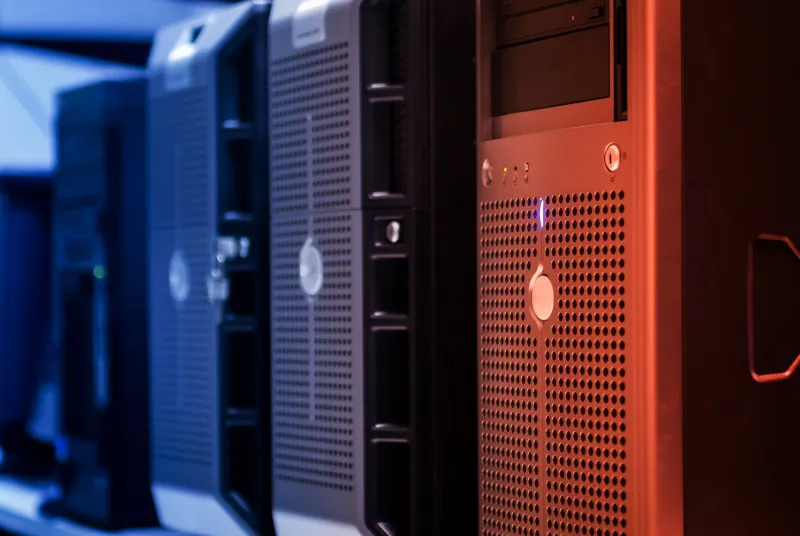
Consider the infrastructure that underpins virtually every digital interaction an American has in a given day. The server that processes a credit card transaction at a grocery store almost certainly runs Linux. The cloud platform hosting a streaming service, a banking application, or a hospital's patient records? Linux. The smartphone in nearly every pocket in the country — Android, which is built on a Linux kernel — runs Linux. The supercomputers ranked on the Top500 list, the systems modeling climate change and designing pharmaceuticals, run Linux almost universally.
According to W3Techs data, Linux powers well over 90 percent of the world's web servers. Amazon Web Services, Microsoft Azure, and Google Cloud — the triumvirate of cloud computing — all rely heavily on Linux as the foundational operating system for their infrastructure. Google, a company whose products touch the daily lives of hundreds of millions of Americans, built its entire empire on Linux-based systems. The irony that Microsoft now enthusiastically maintains Linux distributions and ships a Linux kernel inside Windows via WSL2 is not lost on longtime observers of the operating system wars.
Linux did not fail to take over computing. It simply took over the parts of computing that actually matter at scale.
Why the Desktop Remained Elusive
Understanding the desktop gap requires an honest accounting of what Linux never quite solved for general consumers. Hardware compatibility, while dramatically improved over the past decade, has historically been an obstacle. Driver support for niche peripherals, inconsistent behavior across distributions, and the absence of certain commercial software titles — particularly in gaming and professional creative applications — created a ceiling that open-source enthusiasm alone could not break through.
More fundamentally, the desktop operating system is a deeply habitual environment. Most Americans learned to compute on Windows. Their workflows, their muscle memory, their installed software libraries, and their expectations of what a computer should feel like are all calibrated to that experience. Switching operating systems on a personal computer is not merely a technical decision; it is a disruption of daily cognitive routine. The activation energy required is simply too high for most users, regardless of how technically sound the alternative might be.
There is also a distribution problem that the Linux community has never fully resolved. Walk into any major electronics retailer in the United States and the choice is Windows or macOS. Chromebooks, which run a Linux-based operating system, have made meaningful inroads in the education sector, but they occupy a distinct product category in the consumer mind. Traditional Linux distributions remain a deliberate, self-directed choice — which means they remain the province of those already motivated to seek them out.
The Open-Source Philosophy as Infrastructure
What Linux accomplished instead was arguably more significant than any desktop market share figure could capture. The open-source philosophy that Linus Torvalds embedded in the Linux kernel became the dominant model for how serious software gets built. The tools that professional developers use every day — Git for version control, Docker for containerization, Kubernetes for orchestration, the vast ecosystem of languages and frameworks that power modern applications — are overwhelmingly open-source projects that carry Linux's intellectual DNA.
Developer culture in the United States has been so thoroughly shaped by open-source principles that it is now difficult to imagine the industry operating any other way. Major technology corporations that once viewed open source with suspicion, or even hostility, now maintain dedicated open-source offices, contribute millions of lines of code to public repositories, and build their commercial products on open foundations. This is not charity. It is recognition that the collaborative development model produces better software faster than proprietary alternatives can match.
The principles that Linux advocates championed in the 1990s and early 2000s — transparency in code, community-driven development, the freedom to inspect and modify the systems you depend on — have become foundational assumptions in modern software engineering.
What This Means for Computing Freedom
The philosophical victory of Linux carries a complicated legacy for those who cared most about user freedom. The original promise was not merely that Linux would be technically superior, but that it would give ordinary users genuine control over their computing environments. That promise remains only partially fulfilled.
Android is Linux-based, but the Android device in a consumer's pocket is typically locked down, loaded with manufacturer and carrier software, and designed to funnel users toward proprietary services. The cloud infrastructure running on Linux is owned and controlled by a handful of enormous corporations. Users interact with Linux constantly — through their phones, through web applications, through connected devices — without any of the transparency or agency that Linux's philosophical foundations were meant to provide.
This creates a genuine tension worth examining. Linux won the infrastructure war precisely because it was adopted by organizations with the resources and technical sophistication to deploy it effectively. But that adoption was not accompanied by any transfer of control to end users. The kernel is open; the platforms built on top of it are increasingly not.
The Next Contest
The conversation about Linux and the desktop is not entirely closed. Steam's Proton compatibility layer has made a substantial library of commercial games playable on Linux, and Valve's Steam Deck — a Linux-based handheld gaming device — has introduced the operating system to an audience that would never have sought it out independently. The tools available to someone who wants to use Linux as a daily driver in 2024 are better than they have ever been.
But the more consequential questions about Linux's legacy involve the systems ordinary Americans will never see or touch directly. As artificial intelligence infrastructure expands, as edge computing proliferates, and as connected devices embed themselves further into daily life, the operating systems running beneath all of that will almost certainly continue to be Linux. The question is whether the open-source values that made Linux worth rooting for will survive the journey from philosophy to product.
Linux conquered computing on its own terms. Whether those terms still mean what they once did is a question the technology industry has not yet answered honestly.