Changelog Theater: The Art of Saying Nothing While Pretending to Say Everything
The Monthly Ritual Nobody Can Actually Interpret
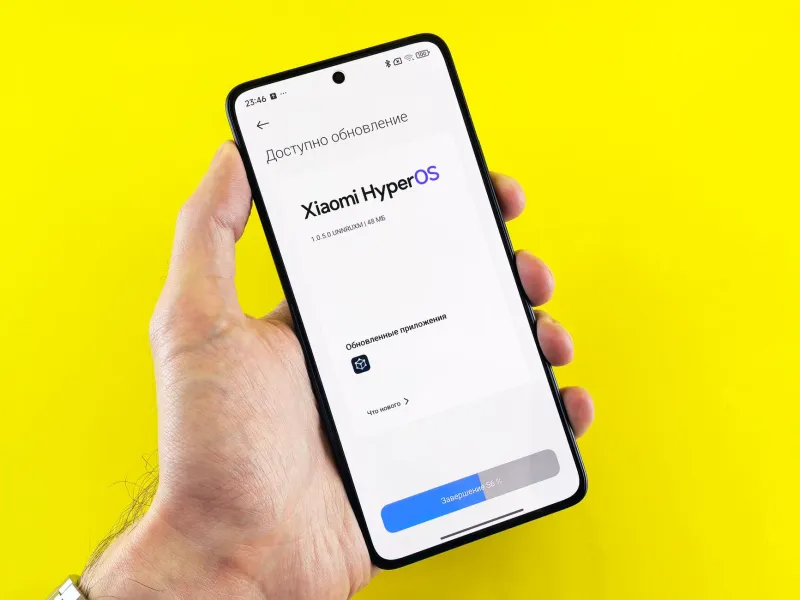
On the second Tuesday of every month, millions of Windows machines across the United States receive a quiet directive: install these updates, trust that they matter, and ask no further questions. Apple dispatches its own cadence of corrections. Linux distributions push package refreshes that arrive with terse, jargon-heavy annotations. And in each case, the person sitting at the keyboard is left performing the same silent calculation — does this change anything meaningful, or am I simply participating in a ritual?
The answer, more often than not, is that there is genuinely no way to know. Not because the information doesn't exist somewhere inside a corporate security organization, but because the update communication pipeline has been deliberately designed to obscure rather than illuminate. What users receive is not transparency. It is the performance of transparency — a carefully managed vocabulary engineered to sound informative while conveying almost nothing actionable.
Parsing the Language of Deliberate Vagueness
Consider the standard architecture of a modern OS update description. Phrases such as "addresses an issue that could allow remote code execution under specific circumstances" or "resolves a vulnerability in the networking stack" are structurally designed to be simultaneously alarming and unintelligible. They invoke severity without quantifying it. They reference components without explaining them. They imply resolution without offering any mechanism by which a user could confirm that resolution has occurred.
This is not accidental. Security researchers and software vendors operate under what is commonly called responsible disclosure — a framework in which full technical details of a vulnerability are withheld until a patch is deployed, theoretically to prevent exploitation during the remediation window. That rationale is legitimate in isolation. The problem is that the vagueness rarely ends once the patch ships. Months after a fix is released, the public-facing documentation frequently remains as uninformative as it was on day one. The security theater doesn't stop when the curtain should rise — it simply continues under a different justification.
The CVSS Score Problem
For technically inclined users, the Common Vulnerability Scoring System offers a numerical severity rating attached to disclosed vulnerabilities. A score of 9.8 out of 10.0 sounds alarming. A score of 3.1 sounds manageable. But CVSS scores measure theoretical severity under ideal attack conditions — they do not measure how likely exploitation is in practice, how widely a vulnerability is being actively targeted, or whether a specific user's configuration is even susceptible.
Vendors have learned to leverage this ambiguity skillfully. A high-severity CVSS score in a patch note generates urgency and compliance. It also generates the impression that the vendor is doing serious, consequential work on your behalf. What it does not generate is any meaningful ability for an ordinary user — or even a moderately experienced IT professional — to assess whether their particular environment warranted concern in the first place.
Microsoft's monthly Patch Tuesday disclosures are perhaps the most visible example of this dynamic in the American market. The documentation accompanying each bulletin has grown more structured over the years, incorporating severity ratings, exploitability assessments, and affected product matrices. And yet, for the vast majority of users, that information remains functionally inaccessible — a wall of structured data that implies rigor without producing comprehension.
Who Benefits From the Fog
The opacity of OS updates does not exist in a vacuum. It serves identifiable interests, and understanding those interests clarifies why the system persists despite its obvious inadequacy as a communication tool.
Vendors benefit because vague update language limits accountability. If a changelog entry says "improves system stability," there is no measurable baseline against which that claim can be tested. If it said "reduces kernel panic frequency by 12 percent under sustained I/O load," someone could check. The imprecision is a liability shield as much as it is a communication strategy.
The enterprise security industry benefits because update opacity sustains demand for interpretation services. Managed security providers, vulnerability management platforms, and threat intelligence subscriptions all derive value from their ability to translate the fog of vendor disclosures into something resembling actionable guidance. If Microsoft's patch notes were genuinely self-explanatory, a significant portion of that market would shrink.
Even the regulatory environment benefits, in a perverse way. Compliance frameworks frequently require organizations to demonstrate that they apply vendor patches in a timely fashion. The requirement to patch, not the requirement to understand what was patched, satisfies the audit. This incentivizes the ritual of update application without incentivizing the harder work of comprehension.
The Verification Gap
Perhaps the most structurally troubling aspect of modern update culture is the complete absence of any user-accessible verification mechanism. When your operating system tells you that a security patch has been successfully applied, what evidence is provided? A checkmark. A timestamp. A version number increment. None of these confirm that the underlying vulnerability has been remediated in any meaningful sense — they confirm only that a file transfer occurred and an installer ran.
For comparison, consider how other consequential systems operate. When a pharmaceutical company releases a revised formulation of a drug, the FDA requires documented evidence of efficacy. When a structural engineer certifies a building repair, that certification carries professional liability. When an operating system vendor tells you that a critical remote code execution flaw has been patched, you receive a green checkmark and are encouraged to restart your computer.
The asymmetry is remarkable. The stakes in software security are, in many documented cases, extraordinarily high — ransomware attacks, data breaches, and infrastructure compromises have caused billions of dollars in damage and disrupted critical services across healthcare, finance, and government. Yet the communication standard for the primary defense mechanism against those threats remains essentially ceremonial.
Toward a More Honest Architecture
None of this is to suggest that operating system updates are fraudulent or that vendors are acting in bad faith across the board. The security research that underpins modern patch development is genuinely sophisticated, and many of the vulnerabilities being addressed represent serious work by serious engineers. The problem is not the patches themselves — it is the communication layer that surrounds them.
A more honest update architecture would separate categories of change with greater precision: distinguishing security remediations from behavioral modifications from telemetry adjustments from feature additions. It would provide post-deployment documentation that doesn't disappear behind a security rationale that expired the moment the patch shipped. It would offer users — even non-technical ones — some mechanism for understanding whether a given update was relevant to their specific usage patterns.
Some Linux distributions, to their credit, do a better job of this than their commercial counterparts. Debian's security advisory infrastructure, for example, provides more granular technical context than most proprietary vendors offer. But even there, the gap between what developers know and what users receive remains substantial.
The operating system update, at its most fundamental, is a promise: that the vendor has identified a problem, resolved it, and delivered that resolution to your device. What users deserve — and what the current system conspicuously fails to provide — is any reasonable means of holding that promise to account.